Wallach Gallery
Lenfest Center of The Arts


A live, durational intervention inspired by the radical legacy of artist Lotty Rosenfeld.

How do the materialities of Lotty Rosenfeld’s work call us to action, inaction, or to wait? 


They step into the gallery to unfold, reimagine, and activate Rosenfeld’s work from within the exhibition itself.

Over the course of ninety minutes, they will rescale, layer, and thread Rosenfeld’s iconic materials and performative gestures to bring them into conversation with their own political urgencies and lived experiences. The intervention unravels through performance actions, participatory exercises, video, and soundscapes that respond to Disobedient Spaces and invite audiences to reflect on resistance, agency, and collective imagination.

SHUOWEN ECHO SHEN
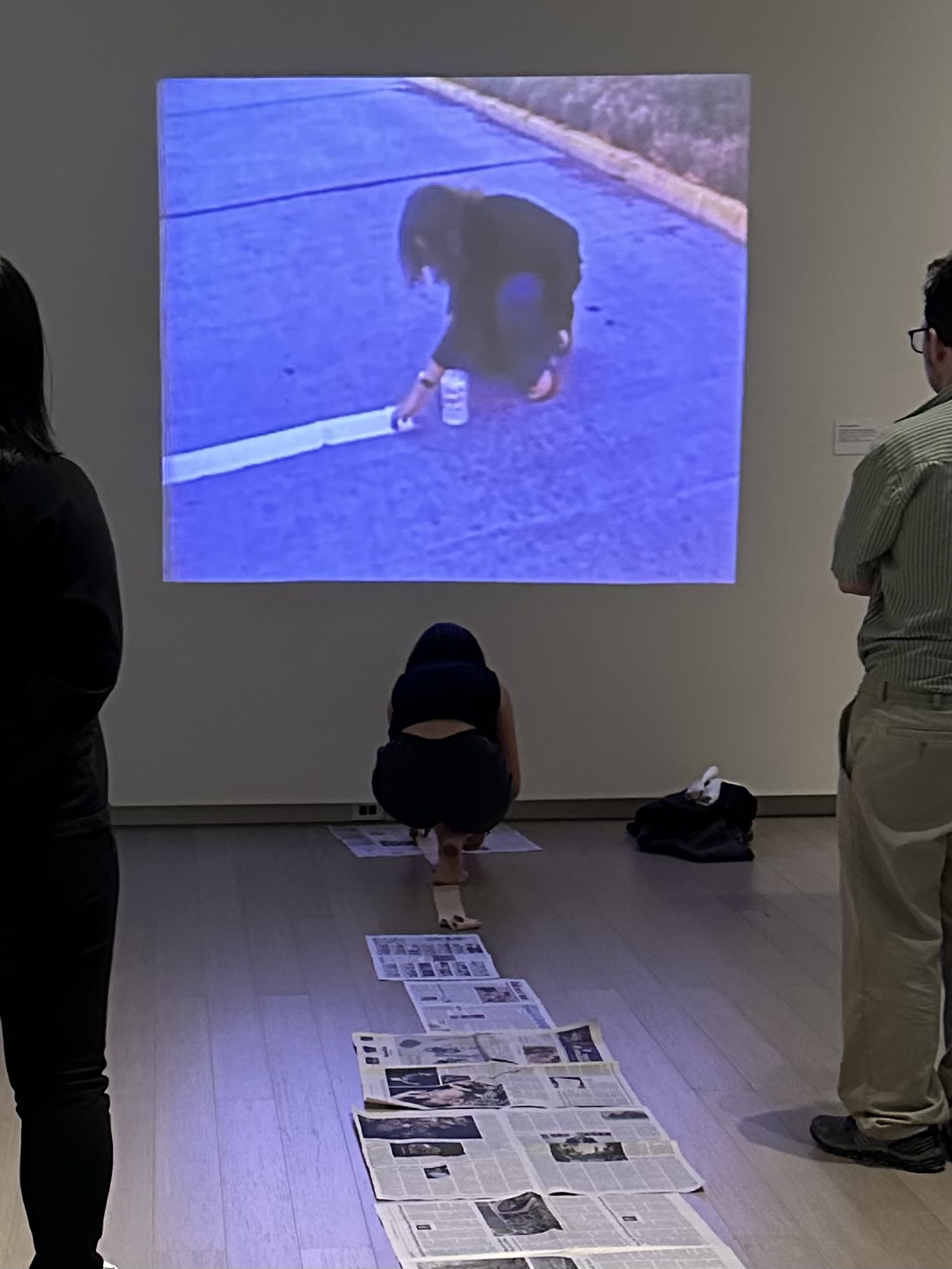
在柏油马路上画一公里的十字 (A mile of crosses in the pavement), 2025
Flesh and Blood; 12,096,831 min 36240 sec. on going
Collection of ?
Advisor: María José Contreras


The initial research question I started with was, “How can the traffic of a space be changed by the presence of a body?” in response to A Mile of Crosses on the Pavement. The way I phrased the question with the word “traffic” was very much inspired by the video’s setting on a road. My initial idea was to use charcoal or dirt so I could make a line by walking on the floor, and it would deepen as time passed.

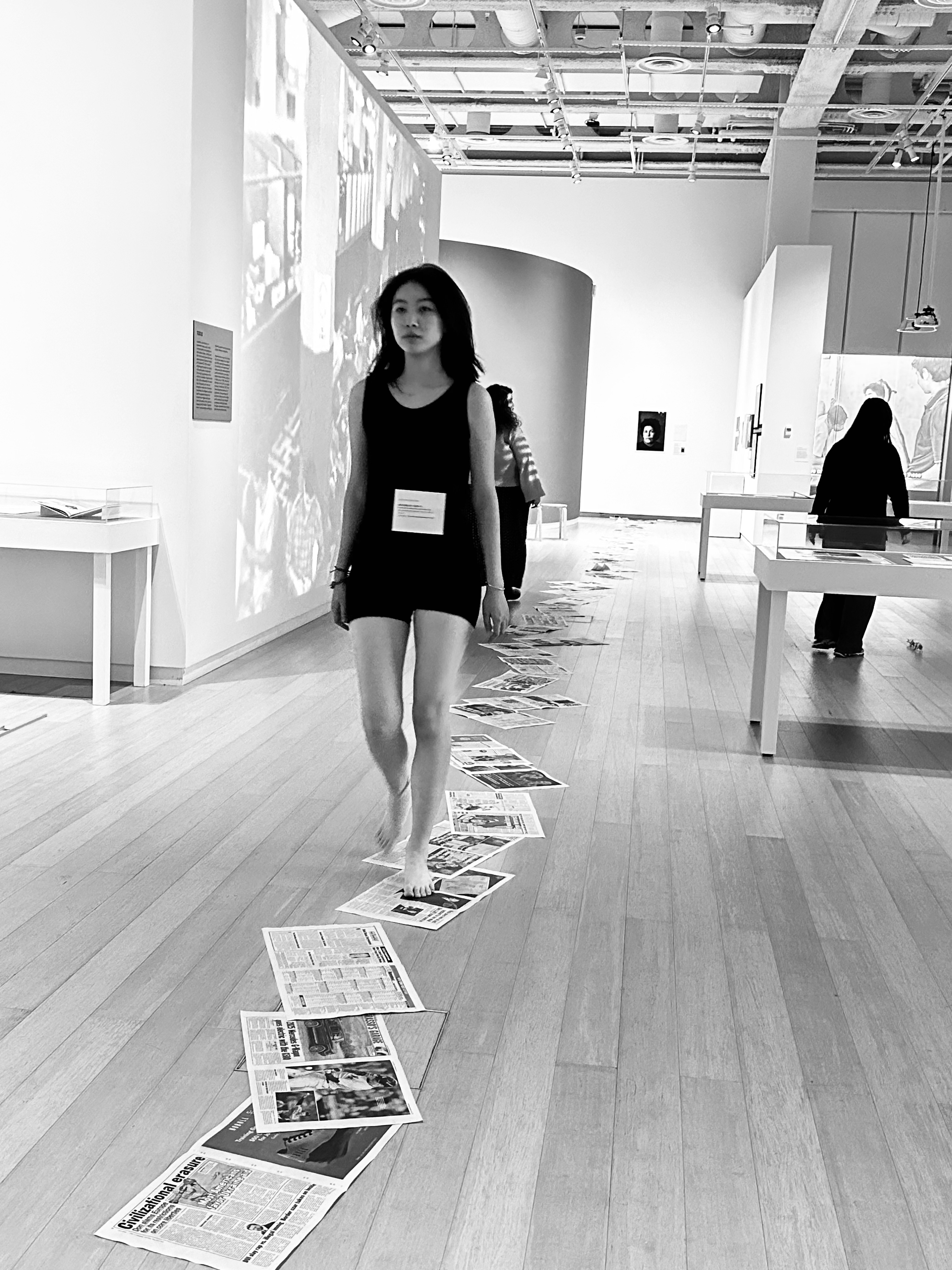
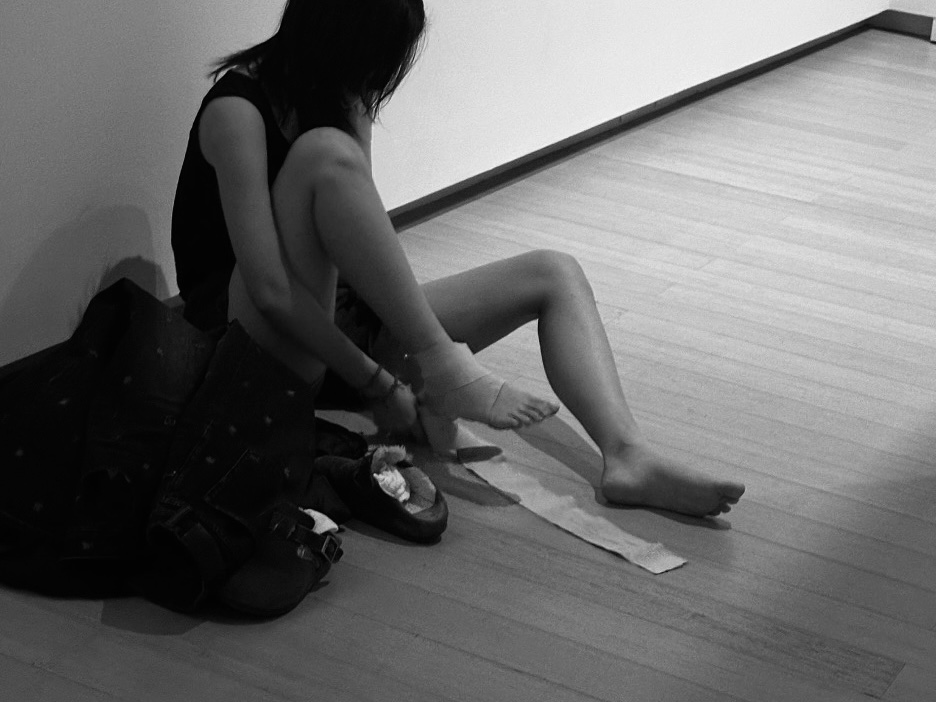
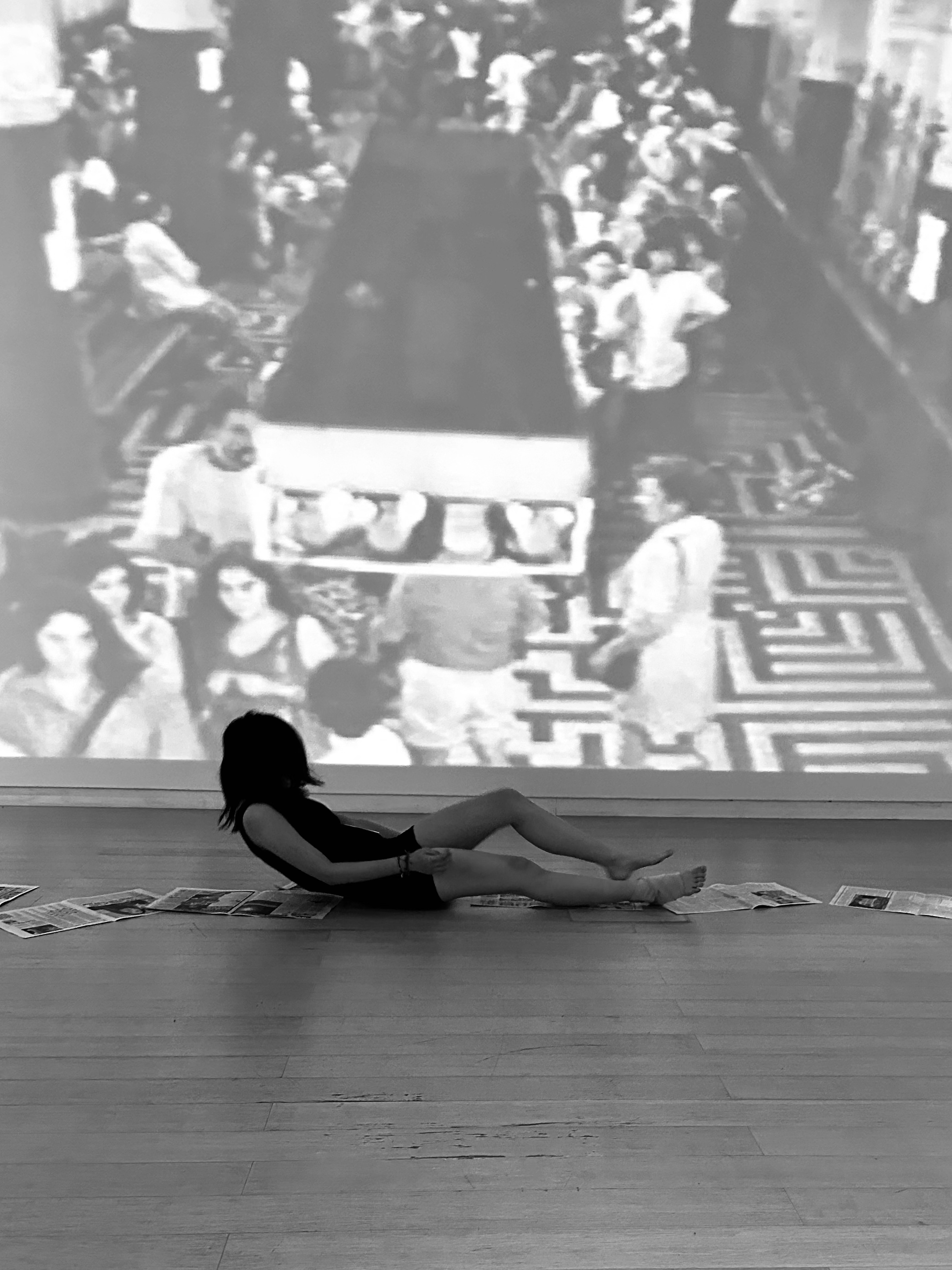
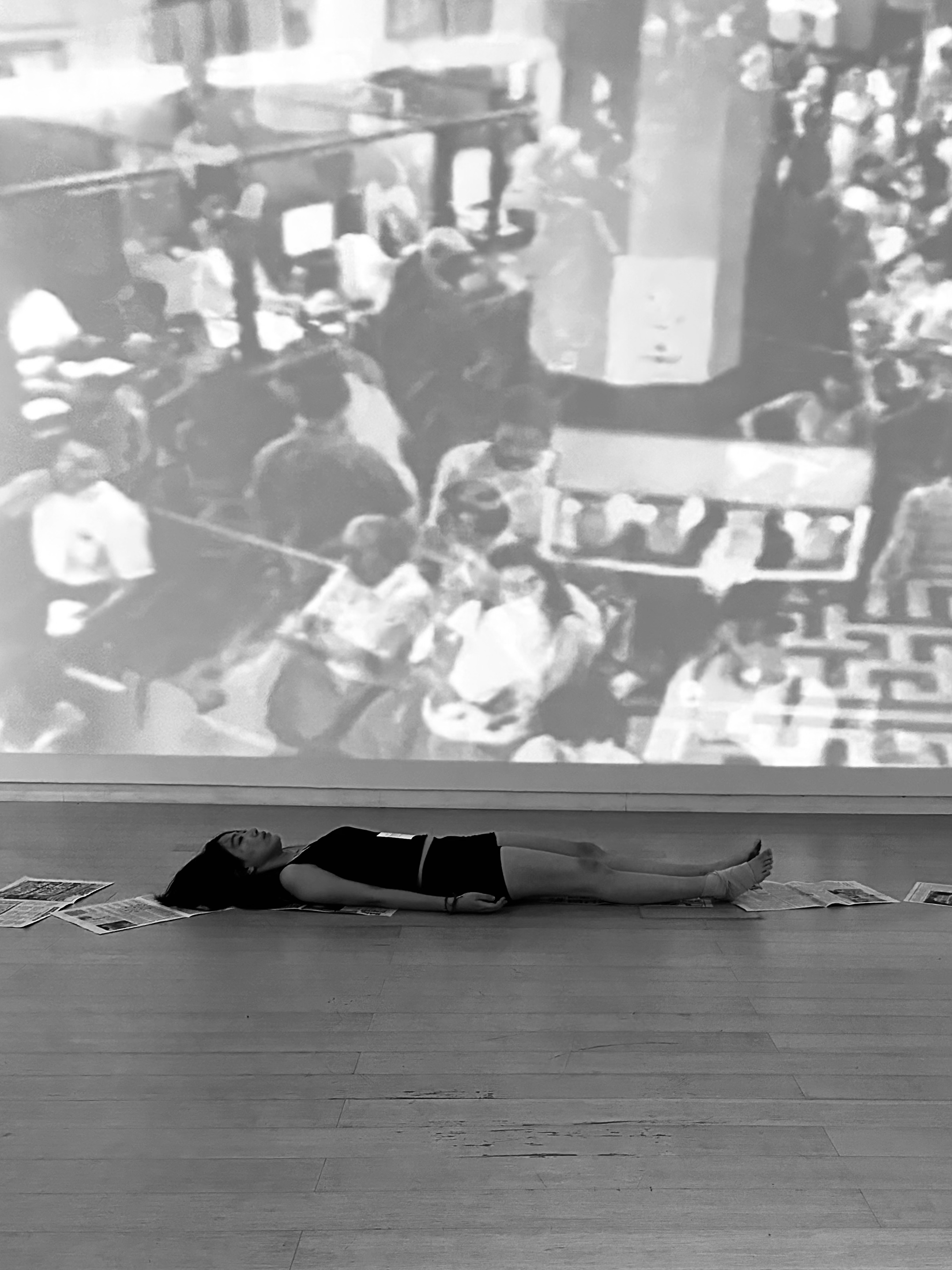
The original intention of undressing was not only to create a transformation from being a spectator of the artwork—a visitor in the gallery who has a moderate distance from the work and a temporary relationship to it—to becoming part of the work with a more permanent durational relationship to the artwork and the space. It was also because the display of a woman’s body already speaks very strongly to Lotty Rosenfeld’s work. I debated whether I should strip to full nudity conceptually without considering the regulations of the space. I ultimately chose not to because I feared that a nude body walking would overshadow the artwork. Because of the bureaucratic system and the anxiety, framed as protection of the artwork, it was not possible in any case. I ended up using newspapers, which became interesting because instead of me making a mark in this institutional space with my body and a certain material, the newspaper melted from my body temperature, protecting the gallery floor while leaving a mark on my body. Maintaining the newspaper in a straight line while walking on it was also nearly impossible. The instinct and attempt to maintain is also interesting to begin with.

During the performance, I entered a liminal space—one that felt almost impossible to interrupt. I felt the coldness in my fingertips. Many of the variations I made were to entertain myself, and because this is a durational piece, I very early on realized that what I was performing was “time.”

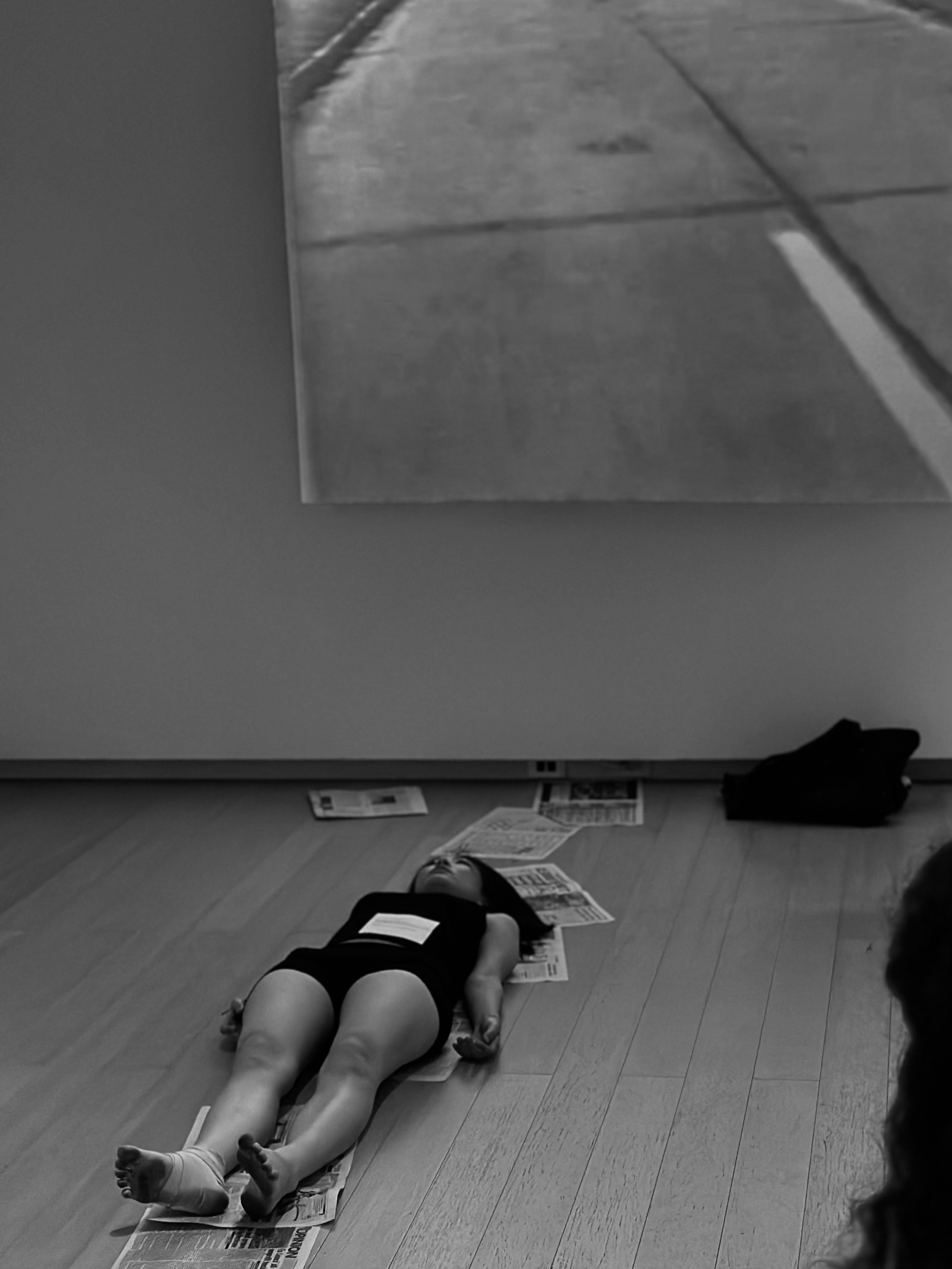
In resisting the idea of time as linear and uniform, I think my research question during the performance shifted to: How can you fold, disrupt, expand, accelerate, reverse, or slow time with the body? I hopped on one foot, walked backwards, walked delicately from toe to heel and heel to toe, tried to walk in the largest “unit” possible by taking very big steps, lay down (what is the smallest unit of time?), and ran (I got cold). There were also moments when I focused purely on walking. When I closed my eyes, the walking relied heavily on my familiarity with the space and the texture of the newspaper, marking the path.


Shuowen Shen 申烁雯